FUNDAMENTALS OF PHOTON ABSORPTION
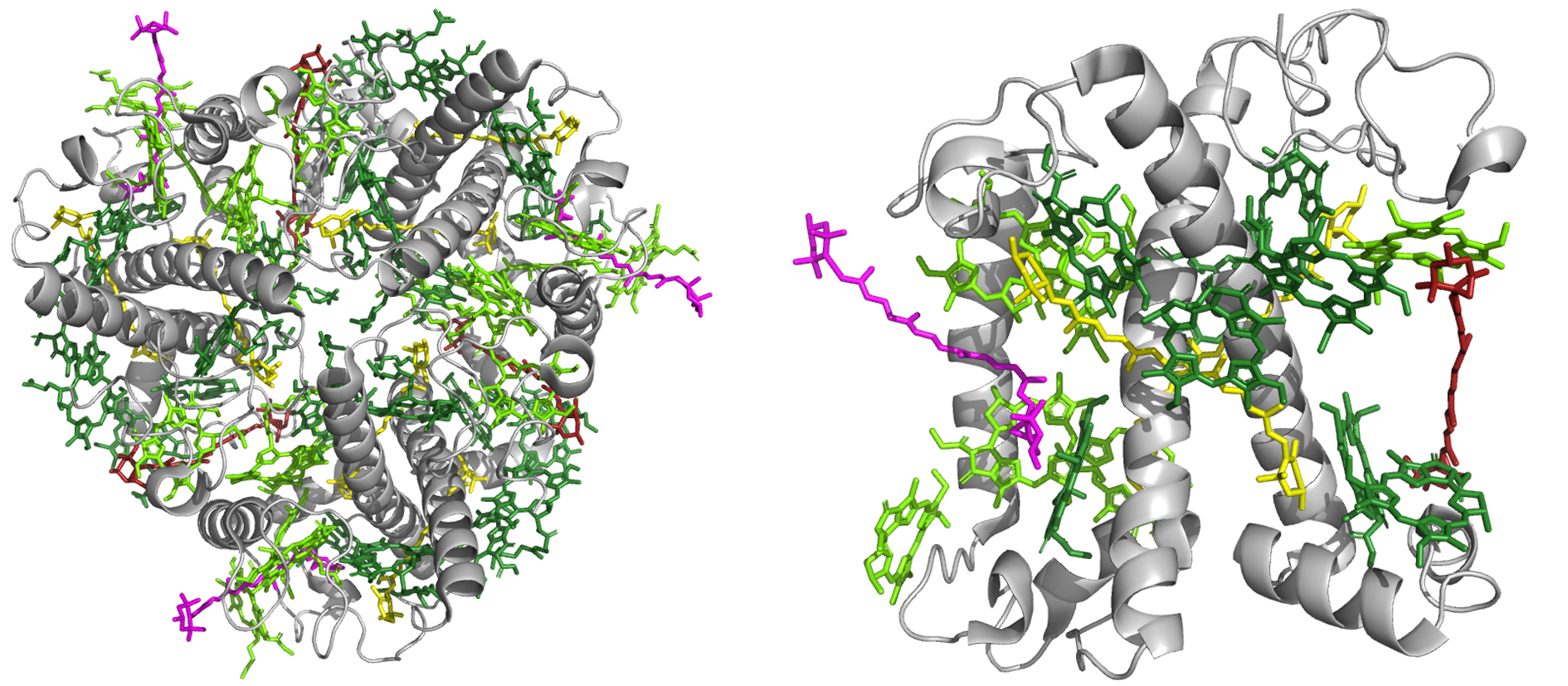
Biological photon capture is mediated by Light-Harvesting Complexes (LHCs), also known as Antenna proteins. They are a distinctive feature of unicellular green algae and land plants, which share a similar organization of the antenna system. The major antenna component is the LHCII complex, a trimeric assembly of multiple, highly homologous gene products. LHCII is present in multiple copies within the photosynthetic apparatus and is by far the major energy collector for the biosphere. Despite being the most abundant membrane proteins on Earth, which bind most of the chlorophylls that make the planet green, LHCs still harbor many mysteries. Our team has a long-standing expertise in studying LHC proteins in algae and plants by using innovative technologies. For instance, we employ a multiplex genome editing approach to delete the entire gene family encoding LHCII in both model and crop species, followed by their complementation with mutant LHCII isoforms. In this way, we expect to identify protein domains involved in the regulation of photon harvesting and photoprotection. By doing so, we could draw a map connecting structural and functional attributes that highlights the specific biological role of each component of the antenna system in vivo and in vitro. The outcomes will drive the rational design of the light-harvesting systems of plants in the context of sustainable agriculture and bio-industry.

Furthermore, we developed plants and algae genotypes that express specific antenna isoforms as their primary antenna complex. By integrating high-resolution, ultrafast spectroscopy with structural biology techniques, we were able to identify the functional differences among these proteins. This has enabled us to create comprehensive maps linking various antenna configurations to their physiological properties within living organisms. Our biophysical characterization aims to evaluate energy transfer, excited state populations, and how excess energy is dissipated. This research is a collaborative effort involving experts in physical chemistry and biophysics from institutions including U.C. Berkeley, MIT, the Polytechnic University of Milan, and the University of Pisa, and is supported by the ERC Advanced Grant “GrInSun”.